
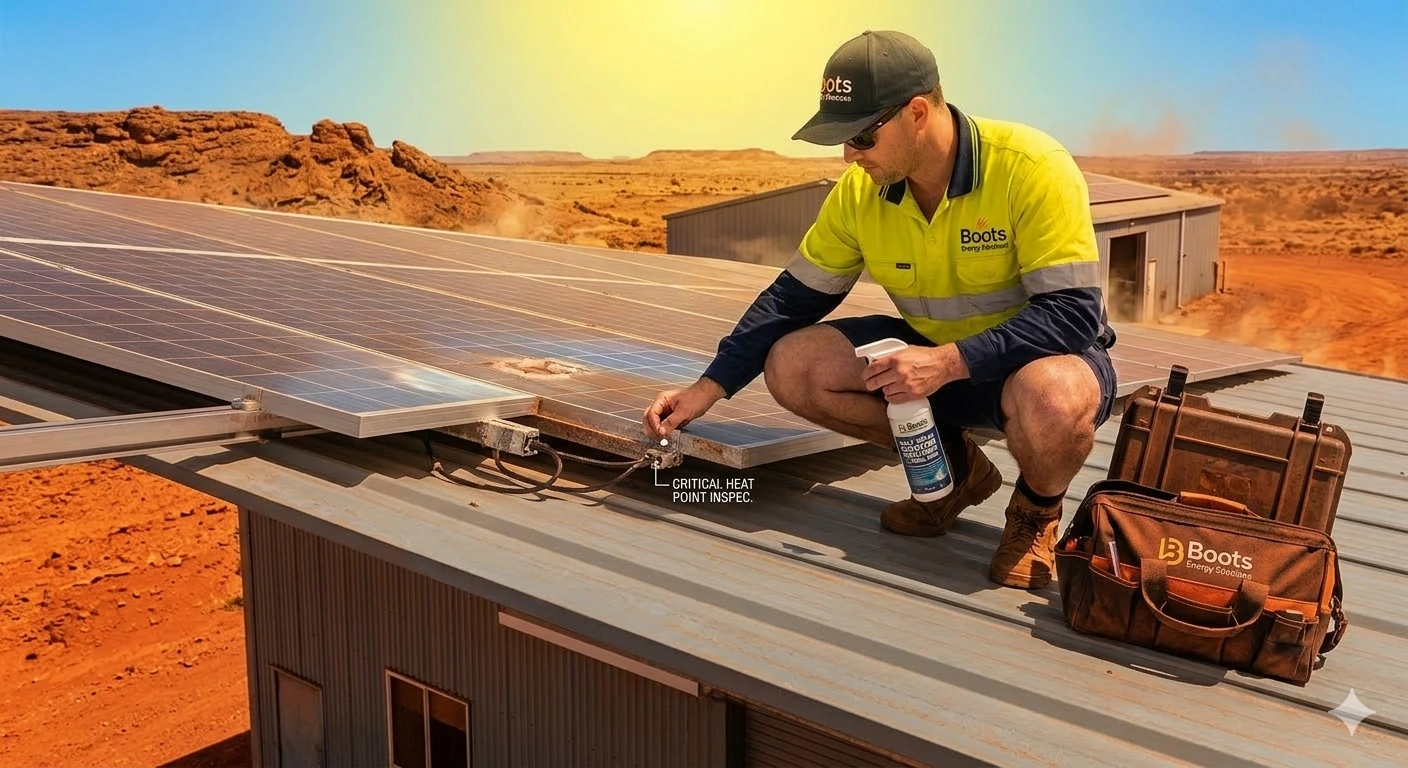
Western Australia offers some of the world’s most breath-taking landscapes, but its harsh climate can be unforgiving for renewable energy systems. From the scorching 45°C+ heat of the Pilbara to the constant salt spray that batters homes along the Perth coastline, your solar panels endure extreme environmental stress year-round. In these conditions, Solar System Maintenance isn’t simply advisable—it’s essential for protecting your long-term investment. Without consistent Solar System Maintenance, system efficiency can rapidly decline, and preventable hardware failures may occur, costing you time, money, and valuable energy output.
Maximizing your energy independence often goes beyond just maintaining panels; it involves optimizing how you store that power for the evening. If you want to dive deeper into how to manage your energy more effectively, check out our Battery Storage Systems guide to see how storage complements a well-maintained array.
The Unique Challenges of the West Australian Climate
Extreme Heat and Thermal Stress in the Pilbara
The Pilbara region is notorious for its record-breaking heat. While solar panels thrive on light, excessive heat can actually decrease their efficiency. High temperatures increase the internal resistance of the photovoltaic cells, leading to a lower voltage output.
Managing Heat Degradation
To combat this, Solar System Maintenance in Western Australia must focus on airflow. Ensuring there is at least a 100mm gap between your roof and the panels allows for convection cooling, which can save your system from “cooking” during a January heatwave.
Red Dust and Soiling Losses
In areas like Port Hedland and Karratha, “red dust” is a constant companion. This fine particulate matter settles on the glass surface, creating a physical barrier that prevents sunlight from reaching the cells.
The Impact of “Baked-on” Grime
When light rain falls on a dusty panel, it often creates a muddy residue that bakes hard under the afternoon sun. Regular solar panel cleaning is required to prevent “hotspots”—areas where shaded cells become resistors and overheat, potentially damaging the panel permanently.
Essential Solar System Maintenance in Western Australia
Visual Inspection Protocols
A monthly visual check is the first line of defense. You don’t need to get on the roof every time; a pair of binoculars can help you spot cracks, discoloration, or debris from the safety of the ground.
Identifying Component Wear
Look for “snail trails” (brown lines on the cells) or moisture inside the glass. In the context of Solar System Maintenance, these are early warning signs that the vacuum seal of the panel has failed, which is common in high-humidity coastal zones of WA.
Professional Electrical Auditing
While cleaning is a DIY task for some, the electrical components require a licensed professional. Checking the integrity of the DC isolators and the inverter’s performance is a critical part of Solar System Maintenance in Western Australia.
Inverter Health Checks
Your inverter is the “brain” of the system. In WA, these are often installed on external walls. Ensure the heatsink is free of spider webs and dust, and check that the display isn’t showing “Relay Error” or “Isolation Fault” codes, which are common after heavy storms.
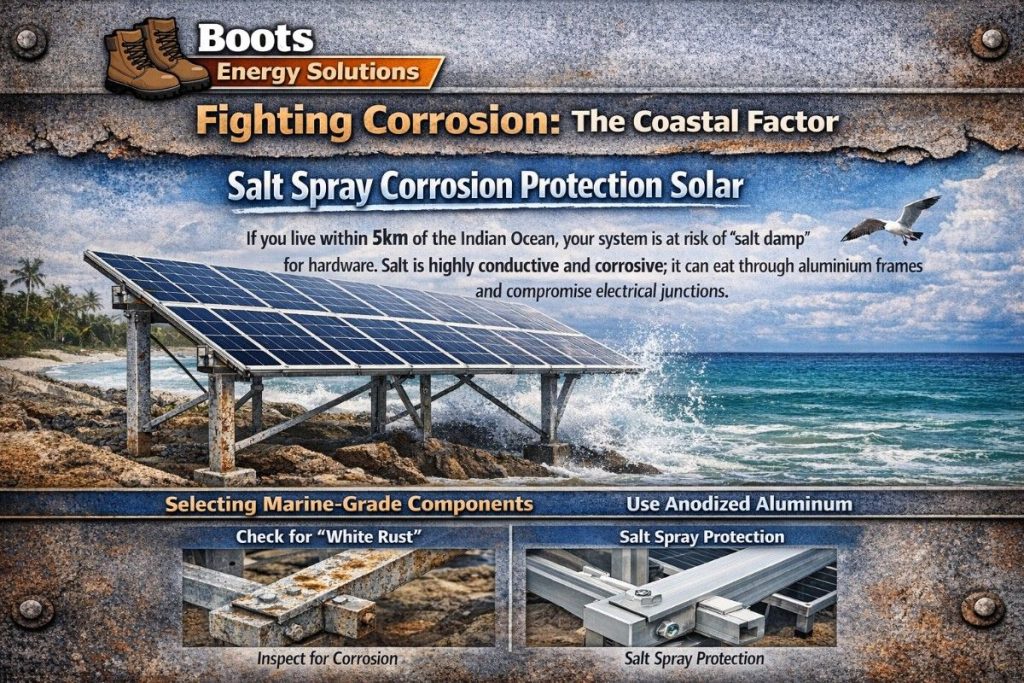
Fighting Corrosion: The Coastal Factor
Salt Spray Corrosion Protection Solar
If you live within 5km of the Indian Ocean, your system is at risk of “salt damp” for hardware. Salt is highly conductive and corrosive; it can eat through aluminum frames and compromise electrical junctions.
Selecting Marine-Grade Components
When performing Solar System Maintenance, ensure your mounting racks are checked for “white rust.” Applying salt spray corrosion protection solar treatments or choosing anodized aluminum components during your initial install can add years to your system’s lifespan.
Maximizing ROI and Efficiency
Understanding Your Energy Yield
Monitoring your daily output via an app is the best way to track the health of your system. If you notice a 20% drop in production compared to the same month last year, it’s a clear signal that Solar System Maintenance in Western Australia is overdue.
Comparing Seasonal Performance
| Factor | Summer Impact | Winter Impact | Maintenance Priority |
| Temperature | High Efficiency Loss | Peak Efficiency | Airflow Check |
| Dust Levels | Extremely High | Moderate (Rain Wash) | Solar Panel Cleaning |
| Daylight Hours | 13-14 Hours | 10-11 Hours | Angle Optimization |
| Shading | Low (High Sun) | High (Long Shadows) | Tree Trimming |
Financial Incentives and Upgrades
Solar Rebate Eligibility in WA
Maintaining an older system can sometimes be less cost-effective than a partial upgrade. Understanding your solar rebate eligibility is key. In Western Australia, the Distributed Energy Buyback Scheme (DEBS) rewards those who maintain efficient systems that export power during peak times.
Upgrading Legacy Systems
If your system is over 10 years old, it may be time to consider modernizing your hardware. For those looking to ensure their home can handle new high-efficiency arrays, Switchboard Upgrades are often the first step in a professional renovation.
DIY vs. Professional Maintenance
When to Call the Experts
While a garden hose can handle basic solar panel cleaning, it cannot fix a faulty DC isolator. Statistics from Clean Energy Council Australia show that a significant percentage of solar fires are caused by poorly maintained or unsealed DC isolators.
Safety First
Never attempt to open an inverter or touch exposed wiring. Professional Solar System Maintenance in Western Australia includes thermal imaging to find hidden faults that the naked eye simply cannot see.
Long-Term Reliability Strategies
Protecting Your Investment
Your solar array is a 25-year asset. By scheduling bi-annual Solar System Maintenance, you ensure that the harsh WA environment doesn’t turn your green investment into a liability.
Vegetation Management
In the Southwest and Great Southern regions, rapid spring growth can lead to unexpected shading. Trimming overhanging branches is a simple yet effective part of Solar System Maintenance in Western Australia that many homeowners overlook.
The Role of Smart Monitoring in Maintenance
Real-Time Data vs. Physical Inspections
In the vast landscape of Western Australia, you can’t always be on-site to check your panels. Modern solar setups now include smart monitoring systems that send alerts directly to your smartphone if production levels dip below a certain threshold.
Diagnosing Issues Remotely
This technology allows for a “predictive” approach to Solar System Maintenance. Instead of waiting for a massive power bill to realize there is a problem, monitoring software can identify a single failing string or a faulty micro-inverter, allowing for targeted repairs that save both time and money.
Protecting Your Inverter from WA Wildlife
Avoiding Geckos and Ant Infestations
Western Australian wildlife is a common but overlooked threat to solar hardware. Inverters generate heat, which attracts geckos, ants, and spiders, especially in the more rural areas of the Wheatbelt and the North West.
Sealing and Shielding Your Hardware
A critical part of Solar System Maintenance in Western Australia is ensuring that cable entries into the inverter are properly sealed. Insects can cause short circuits that lead to expensive board replacements. During your annual check, ensure your technician clears any nests and applies non-conductive barriers to keep pests away from sensitive electronics.
Emergency Shutdown Procedures and Storm Safety
Preparing for the WA Cyclone Season
For residents in the Gascoyne and Pilbara regions, maintenance also means disaster preparedness. High-wind events can turn a loose solar panel into a dangerous projectile. Ensuring your mounting system meets the “Wind Region D” standards is a life-saving maintenance step.
Post-Storm Electrical Verification
After a significant weather event, the most important phase of Solar System Maintenance is a “Safe Restart.” Check for any debris caught under the panels and ensure that the roof penetrations remain watertight. If you suspect water ingress in your isolators, do not attempt to turn the system on until a professional has verified the electrical integrity of the array.
Conclusion
The golden rule for any homeowner in the West is that your system is “set and forget” only until the dust settles or the salt air bites. Effective Solar System Maintenance in Western Australia ensures that whether you are in the heart of the Pilbara or a breezy Perth suburb, your panels continue to slash your power bills and reduce your carbon footprint. By combining regular solar panel cleaning with professional inspections, you protect the structural integrity of your home and the efficiency of your technology.
Don’t let the harsh Australian sun degrade your investment. Contact us today to book a comprehensive health check and ensure your system is performing at its absolute peak.
Frequently Asked Questions
How often should I perform Solar System Maintenance in Western Australia?
In WA, a professional inspection is recommended every 12 to 24 months. However, if you live in a high-dust area like the Pilbara, monthly solar panel cleaning is advised to prevent efficiency loss.
Will salt spray damage my solar panels in coastal WA?
Yes, salt spray can cause corrosion on frames and electrical components. Utilizing salt spray corrosion protection solar coatings and regular rinsing with fresh water can help mitigate these risks.
Can I clean my solar panels myself?
Yes, you can use a soft brush and water to remove dust. However, you should never use harsh chemicals or high-pressure washers, as these can damage the anti-reflective coating on the glass.
Does the WA government offer rebates for maintenance?
Direct rebates for cleaning are rare, but keeping your system efficient ensures you maximize solar rebate eligibility for feed-in tariffs like DEBS, which pay you for the energy you export.
Why is my inverter showing a red light?
A red light usually indicates a system fault, often an “Isolation Fault” caused by moisture or debris. This requires immediate professional Solar System Maintenance in Western Australia to ensure safety.
Does heat reduce the efficiency of my solar panels?
Surprisingly, yes. Solar panels are tested at 25°C; for every degree above that, efficiency drops slightly. Proper ventilation during Solar System Maintenance helps keep them as cool as possible.