
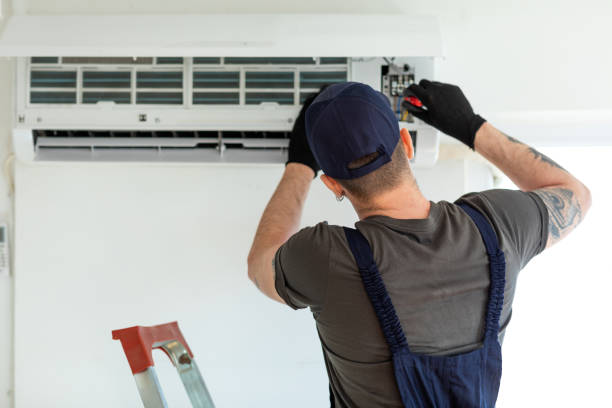
Heating and cooling can make up a significant share of household energy use, so the type of system installed and the way it is operated can have a noticeable effect on electricity consumption. Reverse Cycle Air Conditioning is one option worth considering because the same system can provide cooling in summer and heating in winter.
Unlike conventional electric heaters that create heat directly, a reverse-cycle air conditioner uses refrigeration technology to transfer heat. The Australian Government explains that reverse-cycle systems available in Australia can achieve efficiency levels of around 300% to 600%, because electricity is used to move heat rather than simply generate it.
For homes in Capel, this can make Reverse Cycle Air Conditioning a practical year-round climate-control option. However, efficiency does not depend on the appliance alone. Correct sizing, installation, insulation, thermostat settings, maintenance and everyday operating habits all influence how much electricity the system uses.
Why Does Reverse Cycle Air Conditioning Use Less Energy?
The main efficiency advantage of Reverse Cycle Air Conditioning comes from how it moves heat.
During cooling, the system extracts heat from indoor air and transfers it outside. During heating, the refrigeration cycle is reversed, allowing the system to collect available heat from outdoor air and bring it inside.
This heat-transfer process is fundamentally different from an electric resistance heater. Rather than converting electricity directly into an equivalent amount of heat, a heat pump can move considerably more thermal energy than the electrical energy it consumes.
The Australian Government’s energy guidance states that reverse-cycle air conditioners can deliver approximately three to six times as much heating or cooling energy as the electrical energy they consume under suitable conditions.
That is one reason Reverse Cycle Air Conditioning can be considered an energy efficient air conditioning option when the system is correctly selected and operated.
Key Efficiency Factors for Reverse Cycle Air Conditioning
The table below summarizes the main factors that influence energy performance.
Efficiency factor | Why it matters | Practical consideration for Capel homes |
Correct system size | An undersized unit may run continuously, while an oversized system can cycle unnecessarily | Consider room size, insulation, windows, orientation and ceiling height |
| Inverter technology | Adjusts compressor output to match changing demand | Useful where the system operates for extended periods |
Zoned Energy Rating | Shows performance for different Australian climate zones | Compare the relevant climate-zone rating rather than relying only on star numbers |
| Thermostat setting | Extreme temperature settings can increase electricity use | Use moderate settings and avoid unnecessarily large temperature differences |
Insulation and sealing | Reduces unwanted heat transfer | Seal draughts and improve insulation where practical |
| Airflow | Restricted airflow can reduce performance | Keep filters, vents and outdoor coils reasonably clean |
Maintenance | Dirt and faults can affect system performance | Follow the manufacturer’s maintenance recommendations |
| Installation quality | Poor positioning or incorrect installation can affect efficiency | Use an appropriately licensed installer |
Choosing an energy efficient air conditioning system therefore involves more than comparing purchase prices. The appliance needs to suit the building and the conditions in which it will operate.
Does Inverter Technology Make Reverse Cycle Air Conditioning More Efficient?
Modern inverter systems can improve the way Reverse Cycle Air Conditioning responds to changing room conditions.
A traditional compressor generally operates at fixed output levels, switching on and off as required. An inverter compressor can vary its operating speed. Once the desired temperature is approached, the system can reduce output instead of repeatedly starting and stopping at full capacity.
This can help maintain a more stable indoor temperature while avoiding unnecessary high-output operation.
The Australian Government notes that inverter technology allows a compressor to operate at variable speeds according to the required output, and can reduce running costs, particularly when the air conditioner operates for longer periods.
For a home office, living area or bedroom that needs regular temperature control, this type of operation can contribute to lower energy consumption.
Can Smart Temperature Settings Reduce Energy Use?
The way Reverse Cycle Air Conditioning is operated can have as much influence on energy consumption as the system’s efficiency rating.
Setting a cooling temperature dramatically lower than the outdoor temperature does not necessarily cool the house faster. It can simply require the system to operate for longer or at greater output. The Heating and Cooling Guide from the Australian Government provides practical information about improving heating and cooling efficiency, including sensible temperature settings.
Australian Government guidance states that each degree of extra heating or cooling can increase energy use by around 5% to 10%.
A practical approach is to choose a comfortable temperature rather than trying to make the room extremely cold in summer or very warm in winter.
For occupied rooms, moderate settings are generally more sensible than constantly adjusting the thermostat to extremes. Doors can also be closed where appropriate so the system is not conditioning unused areas.
The following are useful everyday habits:
- Keep cooling and heating settings moderate, close doors to unused areas, clean filters regularly, use curtains or external shading where appropriate, and switch the system off when extended periods of operation are unnecessary.
How Can Installation Affect Reverse Cycle Air Conditioning Efficiency?
Even a highly rated Reverse Cycle Air Conditioning unit can perform poorly if it is installed in an unsuitable location or incorrectly configured.
Indoor airflow needs to reach the occupied part of the room without being blocked by furniture, curtains or other obstructions. The outdoor unit also needs suitable clearance so it can exchange heat effectively.
Electrical requirements, refrigerant connections, drainage and commissioning are other important parts of the installation.
The Australian Government states that air-conditioning installers must be appropriately licensed through the Australian Refrigeration Council for relevant refrigerant work.
For homeowners planning a new system, the air conditioning installation information from Boots Energy Solutions can also be used as a reference for the types of split systems and installation considerations available in Capel.
Correct installation is not simply about getting the appliance working. It is about ensuring the system is suitable for the space and can operate as intended.
Zoned Energy Ratings Help Compare Efficient Systems
When comparing Reverse Cycle Air Conditioning models, consumers should look beyond the basic star rating.
Australia’s Zoned Energy Rating Label provides information about air-conditioner performance across hot, average and cold climate zones. It also provides information about heating and cooling capacity, estimated annual energy use and noise levels.
This is especially useful because an air conditioner may perform differently depending on Australia’s climate conditions.
The Australian Government recommends using the Zoned Energy Rating Label when comparing products and considering whether the system is appropriately sized for the space.
For a Capel homeowner, looking at the applicable climate-zone information gives a more useful comparison than simply choosing the model with the highest advertised star rating.
How Maintenance Supports Reverse Cycle Air Conditioning Efficiency
Regular maintenance helps Reverse Cycle Air Conditioning continue operating properly over time.
Dust can build up on filters, indoor coils and outdoor components. Restricted airflow can make the system work harder, while a fault in electrical components, refrigerant circuits or controls can affect performance.
The Australian Government recommends keeping indoor units clean, cleaning filters and arranging regular servicing by a licensed technician.
Filter cleaning is often something homeowners can carry out according to the manufacturer’s instructions. Professional maintenance is different because it can include inspection of components that are not accessible during routine household cleaning.
Boots Energy’s Capel air-conditioning information also identifies filter cleaning, coil cleaning, refrigerant checks, electrical inspections and thermostat testing among servicing tasks.
Keeping maintenance consistent can help identify small problems before they develop into more noticeable performance issues.
Conclusion
Reverse Cycle Air Conditioning can improve household energy efficiency because it transfers heat rather than relying on direct electrical heating. Government guidance indicates that these systems can achieve substantially higher efficiency than simple electric resistance heating under suitable conditions.
For homeowners in Capel, the best results come from looking at the whole picture: choose an appropriately sized system, compare the Zoned Energy Rating Label, consider inverter technology, maintain filters and equipment, and avoid unnecessarily extreme thermostat settings.
If you are considering a new system or replacing an older one, contact Boots Energy Solutions to discuss your air-conditioning requirements and arrange an assessment suited to your Capel property.
Frequently Asked Questions
1. Is Reverse Cycle Air Conditioning cheaper to run than electric heating?
It can be. Reverse-cycle systems transfer heat instead of generating it directly, which can make them considerably more efficient than conventional electric resistance heaters under suitable operating conditions.
2. Does inverter technology reduce air conditioner electricity use?
Inverter technology can reduce energy consumption by allowing the compressor to vary its output according to demand. This is particularly useful when the system operates for longer periods.
3. What temperature should I set my air conditioner to?
A moderate, comfortable temperature is generally more efficient than an extreme setting. Australian Government guidance notes that each degree of additional heating or cooling can increase energy use by about 5% to 10%.
4. How often should a reverse-cycle air conditioner be cleaned?
Filters should be cleaned according to the manufacturer’s instructions and more frequently during periods of heavy use. Professional servicing should also be arranged as recommended for the particular system.
5. Is a split system or ducted reverse-cycle system more efficient?
Neither is automatically more efficient in every home. A split system can be effective when only selected rooms need conditioning, while a ducted system can suit properties requiring broader whole-home coverage. Correct sizing and operation are more important than the system type alone.