
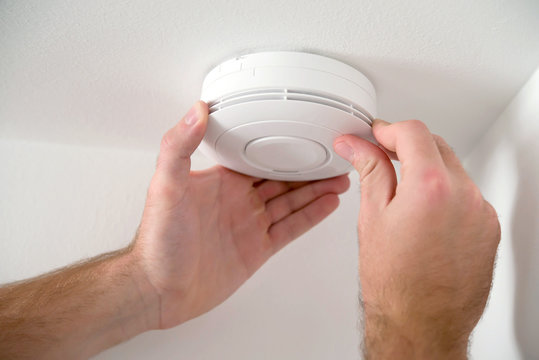
A properly planned Smoke Alarm Installation can give Capel households an earlier warning when a fire starts, helping occupants respond before smoke and heat spread through the property. However, installing an alarm is not simply a matter of fixing a device to the nearest section of ceiling. The alarm type, position, power supply, interconnection and ongoing maintenance all affect how well the system performs.
For homeowners considering Smoke Alarm Installation in Capel, it is important to understand the requirements that apply in Western Australia. A suitable alarm needs to meet the relevant Australian Standard, be positioned correctly and remain in working order. Properties being sold, rented or hired also have specific requirements under Western Australian legislation. Understanding these steps can help property owners make informed decisions about fire protection.
1. Assess the Property Before Smoke Alarm Installation
The first step in Smoke Alarm Installation is to assess the property rather than choosing alarm locations at random. The layout, number of storeys, bedrooms, ceiling design and existing electrical wiring can all affect the installation.
For a typical home, attention should be given to bedrooms, hallways and areas forming part of the escape path. Western Australian guidance states that the exact location requirements depend on the building classification. For a Class 1a dwelling, smoke alarms are required in corridors associated with bedrooms, or in an area between bedrooms and the remainder of the dwelling where there is no corridor. Additional requirements can apply to stories without bedrooms.
A property assessment can also identify whether existing alarms are outdated, incorrectly positioned or unsuitable for the room. This is particularly relevant in older Capel homes where renovations, extensions or changes to the electrical system may have altered the original arrangement.
2. Choose the Appropriate Smoke Alarm
The type of alarm selected is another important part of Smoke Alarm Installation. Photoelectric smoke alarms are recommended by Western Australia’s Department of Fire and Emergency Services because they are better suited to detecting smouldering fires, which can produce substantial smoke before flames become obvious.
Mains-powered alarms can provide continuous power and are commonly used where legislation requires them. Battery-operated models may be appropriate in specific circumstances where running the required electrical wiring is not practicable.
Heat alarms are different from smoke alarms. They respond to temperature changes and can be useful in areas where smoke, dust, steam or fumes may cause nuisance alarms. They should not simply be substituted for a smoke alarm where a smoke alarm is required.
When choosing equipment, homeowners should check that the smoke alarm complies with AS 3786. Western Australian Government guidance states that compliant alarms should carry the relevant AS 3786 marking.
3. Position the Alarm Correctly
Correct positioning is one of the most important parts of Smoke Alarm Installation. Even a compliant alarm may not provide effective warning if it is placed in an unsuitable location.
Smoke alarms are generally positioned on or near the ceiling. WA Government guidance states that a ceiling-mounted alarm should be at least 300mm away from the junction between a wall and ceiling. Where ceiling installation is not possible, a wall-mounted alarm should generally be positioned between 300mm and 500mm below the ceiling.
Sloping and cathedral ceilings require additional care. On a sloping ceiling, the alarm should be positioned between 500mm and 1500mm from the highest part. Dead-air spaces should also be avoided because trapped hot air can prevent smoke from reaching the alarm efficiently.
4. Avoid Locations That Can Cause False Alarms
Good Smoke Alarm Installation also involves knowing where not to place an alarm. Installing one too close to cooking appliances, bathrooms, heating equipment or areas exposed to excessive moisture can result in nuisance alarms.
Repeated false alarms can become more than an inconvenience. If an alarm sounds frequently without a genuine fire, occupants may become tempted to remove the battery or disconnect the device. That can leave the property without effective warning when a real fire occurs.
DFES advises keeping smoke alarms away from kitchens and cooking appliances, bathrooms, laundries, heaters, fireplaces and certain doors or windows. It also recommends observing minimum clearances from ceiling corners, light fittings and air-conditioning or heating vents.
5. Consider Interconnected Smoke Alarms
Interconnection is another key consideration when planning Smoke Alarm Installation. When alarms are interconnected, activation of one alarm can cause the others to sound. This can be particularly useful in larger or multi-level homes where a fire may begin away from the bedrooms.
Western Australian requirements state that smoke alarms must be interconnected where more than one alarm is installed in a dwelling, subject to the applicable building circumstances. For dwellings constructed under building permit applications made before 1 May 2015, the interconnection requirement does not apply in the same way.
For newer homes, interconnected alarms can help ensure that an alert is heard throughout the property rather than only in the room or hallway where smoke is first detected.
6. Check the Power Supply and Wiring
Power requirements should be considered before Smoke Alarm Installation begins. Mains-powered smoke alarms are required in a range of Western Australian residential circumstances, including certain newer, renovated, sold and rented properties. They must be permanently connected to the mains supply.
Only a licensed electrical contractor can connect or disconnect mains-powered smoke alarms. This makes professional installation particularly important where new wiring, replacement wiring or changes to an existing mains-powered alarm are involved.
A battery-powered alarm is not automatically an alternative simply because installation is more convenient. WA Government guidance provides specific circumstances in which a battery-powered alarm may be permitted, such as where there is no hidden space available to run the required wiring and there is no suitable alternative location.
7. Understand the Smoke Alarm Requirements in WA
Understanding local smoke alarm requirements is essential for homeowners, landlords and property managers. Western Australian requirements are linked to the Building Act 2011, Building Regulations 2012, the Building Code of Australia and referenced Australian Standards.
For properties subject to sale, transfer of ownership, rent or hire, compliant smoke alarms need to be installed and maintained according to the applicable requirements. WA Government guidance states that such alarms must be in working order, permanently connected to mains power where required and not more than 10 years old or past their expiry date.
For the most current legal information, property owners can refer to the WA Government smoke alarm requirements before arranging installation or replacement.
8. Complete Testing After Installation
Testing is an essential part of Smoke Alarm Installation because an alarm should not simply be assumed to work once it has been mounted.
After installation, the device should be tested according to the manufacturer’s instructions. For routine checks, DFES recommends pressing the test button until the alarm sounds. Mains-powered alarms should also be checked for their appropriate power indicator.
If interconnected alarms are installed, testing should also confirm that the connected alarms respond correctly. Any unusual beeping, failure to activate or warning indicator should be investigated rather than ignored.
Smoke Alarm Installation Checklist
The following points provide a practical overview of the main considerations for a residential property:
- Assess the property’s layout, bedrooms, levels and ceiling design; choose compliant alarms; position them away from dead-air spaces and nuisance-alarm sources; check mains power and interconnection requirements; test each alarm after installation; and record future maintenance or replacement dates.
9. Plan for Smoke Alarm Maintenance
Good Smoke Alarm Installation is only the beginning. Regular maintenance helps keep the system ready to operate when needed.
DFES recommends checking smoke alarm indicators and testing alarms monthly. Dust and cobwebs can affect sensors, so alarms should also be cleaned regularly using appropriate methods. Where a 9-volt alkaline battery is used, it should generally be replaced annually.
Maintenance should also include checking the physical condition of the alarm and ensuring it remains securely attached. A device that has become loose, damaged or contaminated may require attention even if it still produces a test sound.
Property owners should keep track of installation dates because smoke alarms do not last indefinitely. DFES advises replacing smoke alarms every 10 years as their sensitivity can decrease over time.
10. Know When Smoke Alarm Replacement Is Needed
Smoke alarm replacement may be necessary when an alarm reaches the end of its service life, repeatedly gives warning sounds, fails testing or becomes faulty.
Replacing only the battery may not solve a problem when the alarm itself has reached the end of its usable life. DFES states that all smoke alarms and heat alarms should be replaced every 10 years.
A replacement should also be assessed in relation to the current property requirements. Simply installing a newer version in exactly the same position may not be appropriate if the existing location does not meet current guidance.
Installation consideration | What to check | Why it matters |
| Alarm type | Photoelectric, heat or another suitable type | Different devices are designed for different conditions |
Australian Standard | Look for AS 3786 compliance where applicable | Helps confirm the alarm meets the relevant standard |
| Location | Ceiling position, clearances and escape paths | Correct positioning helps smoke reach the alarm |
Power supply | Mains connection or permitted battery option | The power source must suit the property’s requirements |
| Interconnection | Whether multiple alarms need to communicate | One alarm can alert occupants in other areas |
Testing | Test button and indicators | Confirms the alarm is operating correctly |
| Maintenance | Cleaning, battery checks and condition | Helps maintain reliable operation |
Replacement | Age and expiry date | Older alarms can become less sensitive |
Smoke Alarm Installation for Older Capel Homes
Older properties can present additional challenges during Smoke Alarm Installation. Ceiling construction, limited roof access, extensions and previous electrical work may affect where alarms can be positioned and how they can be powered.
A property may also have alarms that were compliant when installed but are now approaching or exceeding their service life. In these situations, homeowners should look beyond simply replacing a battery.
Where mains-powered equipment needs to be connected or disconnected, the work should be completed by a licensed electrical contractor. This is particularly important where wiring changes are required or where existing alarms need to be relocated.
For homeowners planning renovations, it is also sensible to review the smoke alarm arrangement before work begins. Alterations can change room layouts, sleeping areas and escape routes, potentially affecting where alarms are required.
Why Professional Smoke Alarm Installation Matters
Professional Smoke Alarm Installation brings together several considerations that are easy to overlook during a DIY approach. The installer can assess suitable locations, identify power requirements, check existing equipment and determine whether interconnected alarms are appropriate.
It also helps reduce the risk of positioning mistakes. An alarm installed too close to a wall junction, air-conditioning outlet, kitchen or humid area may be more likely to produce nuisance alarms or respond less effectively to smoke.
For mains-powered systems, professional installation is especially important because WA requirements specify that only a licensed electrical contractor can connect or disconnect mains-powered smoke alarms.
For Capel homeowners, the goal should not simply be to have a smoke alarm on the ceiling. The aim is to have a correctly selected, correctly positioned, properly powered and regularly maintained system that supports early warning throughout the home.
Conclusion
Effective Smoke Alarm Installation involves more than simply choosing an alarm and fixing it to the ceiling. Capel homeowners need to consider the right alarm type, positioning, power supply, interconnection and ongoing maintenance. Arrange Your Installation Today to ensure your system is set up correctly and suited to your property.
A correctly planned system can provide an earlier warning of smoke and fire while supporting a safer escape for occupants. Regular testing and timely replacement are equally important because even a properly installed alarm can become unreliable when it is neglected or reaches the end of its service life.
If you are reviewing the alarms in your home, replacing older units or planning a new installation, Boots Energy can help you arrange the appropriate electrical service for your property.
Frequently Asked Questions
1. Where should smoke alarms be installed in a Capel home?
Smoke alarms should be positioned according to the property’s building classification and applicable WA requirements. For a typical dwelling, areas associated with bedrooms and escape paths are particularly important.
2. Are interconnected smoke alarms required in Western Australia?
Where more than one smoke alarm is installed, interconnection requirements can apply depending on the dwelling and when its building permit application was made. Homes built under applications made after 1 May 2015 generally have interconnection requirements.
3. How often should smoke alarms be tested?
DFES recommends testing smoke alarms monthly. The test button can be used to confirm that the alarm produces the expected warning sound.
4. When should a smoke alarm be replaced?
Smoke alarms should generally be replaced every 10 years. An alarm may also require earlier replacement if it is faulty, damaged or continues to beep after appropriate maintenance.
5. Can I install a mains-powered smoke alarm myself?
Mains-powered smoke alarms must be connected or disconnected by a licensed electrical contractor in Western Australia. Battery-powered alarms have different requirements, but the manufacturer’s installation instructions and applicable regulations should still be followed.