
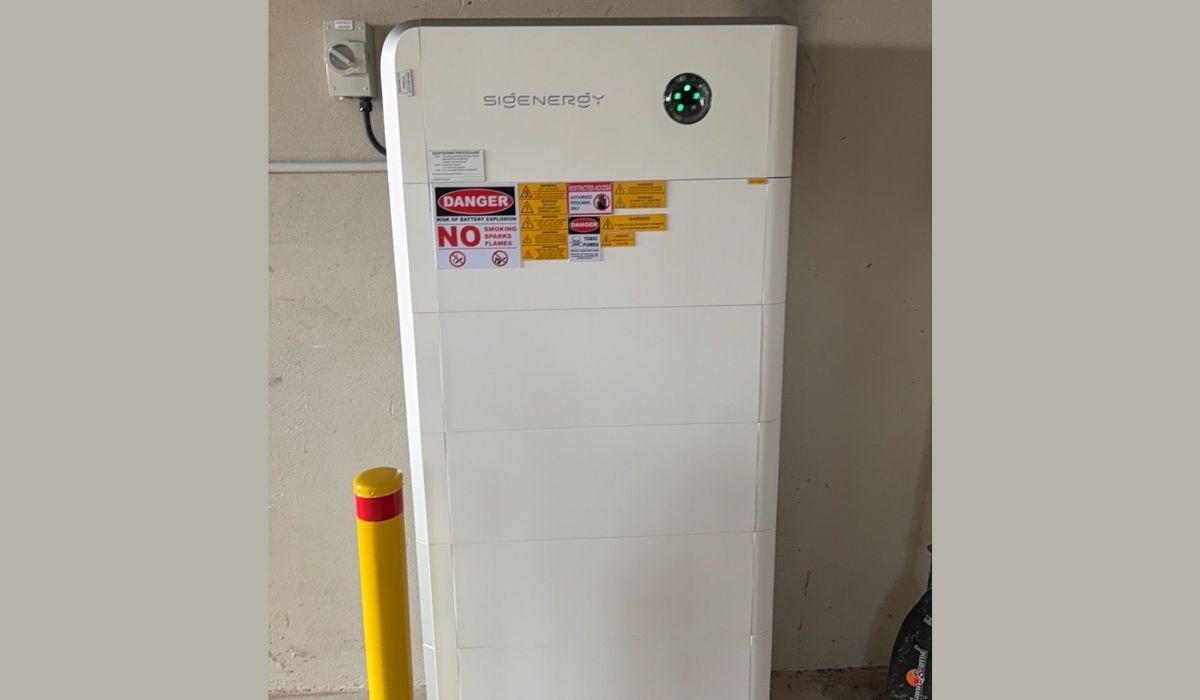
Imagine you’re at home in Capel and a sudden storm trips the power. The lights flick off, the aircon dies – but your fridge is still humming and your laptop is charging. Why? Because you had a solar battery installation keeping your essentials on backup power. I’ve been there myself. After one big blackout, I installed a home storage battery and now I don’t scramble for candles – my battery just kicks in and keeps everything running.
With Capel’s 5.2 peak sun-hours per day, adding a battery to your solar system is a no-brainer. It’s like giving your house its own giant power bank: capture daytime sun, save it, and use it later. In other words, a solar battery installation means you truly capture the sunshine for yourself. A solar battery installation essentially turns your roof into a 24/7 power station.
What is Solar Battery Installation
Solar Battery Installation means installing a rechargeable battery (or multiple batteries) alongside your rooftop solar panels. Normally, any extra power your panels generate would be sent into the grid for a small credit. With a battery, you store those extras and use them later – at night or during an outage. In a typical setup, your solar panels feed a special inverter and battery by day, and after dark the battery discharges to run your home.
Below are some of the big benefits of Solar Battery Installation:
- Store excess solar power: Save sunshine for later. Instead of exporting it cheaply to the grid, your battery soaks up the extra.
- Backup power: If the grid goes down, a properly configured battery can keep critical circuits on (lights, fridge, modem, etc.)
- Lower bills: By using stored solar in the evenings or peak-rate times, you buy far less electricity. This drives your grid imports toward zero.
- Reduce reliance on the grid: More self-generated power means less from the utility. In short, a battery + solar combo helps you inch toward complete energy independence.
- Cleaner energy use: The more solar you store and use, the smaller your carbon footprint. You’ll be running on sun, not coal.
These aren’t pie-in-the-sky claims. Australians are piling into battery installs. A record 183,245 home batteries were sold nationally in late 2025. The Federal Government wants us on board too – its new Cheaper Home Batteries program covers roughly 30% of the cost for eligible installs starting July 2025. In WA, the state scheme gives Synergy customers up to $1,300 off a home battery. For more details, see the WA Government’s Residential Battery Scheme page.
Components of a Solar Battery Installation
Building your solar battery installation starts with the right gear:
- Batteries: Most Aussie homes use lithium-ion batteries (for example, lithium iron phosphate) because they last a long time and need almost no maintenance. These have pretty much replaced old lead-acid units on the market. Nearly every modern solar battery installation uses lithium technology.
- Modular Units: Some systems (for example, Alpha ESS or Tesla Powerwall) let you plug together multiple battery modules. You might start with one 5 kWh block and add more later. It’s like building with Lego – flexible and future-proof.
- Inverters – Hybrid vs. AC-coupled: The solar inverter turns panel power into AC for the home. A hybrid inverter manages both your panels and your battery together. In this DC-coupled setup, solar power can charge the battery directly. Alternatively, you might have a separate battery inverter (AC-coupling). Your installer will choose the best fit for your system. Hybrid inverters are key parts of many solar battery installations, ensuring smooth energy flow.
- Battery Capacity: Battery size is measured in kilowatt-hours (kWh). Typical home batteries range from about 4-6 kWh up to 10-15 kWh. Smaller batteries handle basic evening loads; bigger ones can run most of a family home overnight. Pick a size to match your energy habits and goals.
- Certifications & Warranties: Always choose batteries from the Clean Energy Council’s approved list. Check the warranty (often 10+ years or a set number of cycles). A strong warranty and safety certifications ensure your solar battery installation will keep chugging along year after year. Installers should follow all standards – batteries need proper mounting, clearances, and fuses.
Finally, modern systems come with an app or web portal. After installation, you’ll set up a smartphone app to monitor the system (showing solar production, battery state-of-charge, and home usage). Watching your power flow on your phone is neat – you can see the sun charging your battery or powering the house in real time.
Solar Battery Installation: Process and Safety
A solar battery installation is done by a qualified electrician/installer. The typical steps are:
- Assessment & design: The installer surveys your existing panels, switchboard, and power use to choose the right battery size and inverter.
- Safety prep: They verify the battery location meets all rules (clearances from walls, windows, etc.). Your solar will be powered down during the work.
- Mounting & wiring: The battery units are secured (often on a wall or concrete pad) and the inverter is mounted. Then panels, battery and home wiring are connected according to plan.
- Commissioning & testing: The system is switched on and configured. The installer programs your energy plan (so the battery knows your tariffs) and tests that charging and backup modes work as intended.
- Grid connection & go-live: Finally, the installer notifies Western Power/Synergy and installs or upgrades the meter. Once the system passes inspection, it’s live. You’ll set up the monitoring app, and then your system will start charging during the day and discharging as needed.
Only certified installers handle solar batteries – it involves high-voltage DC and large capacities. When the job is done, you’ll get paperwork (a compliance certificate) showing the installation meets all Australian standards. Then you’re all set.
Costs and Savings of Solar Battery Installation
A solar battery installation isn’t cheap upfront. A typical 10 kWh battery system (battery + inverter + install) might cost $10,000-$15,000 before incentives. But remember those rebates! The Federal battery program chops roughly 30% off, and WA’s scheme knocks off a few thousand dollars.
After rebates, a 10 kWh setup could end up near $7,000-$10,000 net in Capel. Consider the payoff: if you use a lot of power after dark, you’ll save hundreds per year. Some WA households report their power bills dropping to almost zero once their battery was up and running.
Use tools like Sunspot to run the numbers. Enter your usage and tariffs; it will estimate how many years to break even. Payback might be 8-12 years, matching the warranty length. But beyond dollars, you get security: your solar battery installation can keep the lights on and give you real energy independence. In sunny Capel, a battery system often pays off sooner than you think.
After Your Solar Battery Installation: Maintenance & Monitoring
One great thing about a modern solar battery installation is how little maintenance they need. Lithium batteries have long life and low maintenance. You won’t be checking fluids or cleaning battery terminals. Just keep the area dry and dust-free.
Your system’s app will do most of the work. Check it occasionally: if solar generation dips or the battery isn’t charging properly, the app will flag it. Other than that, just give your solar panels a wash every year or so (rain does most of it in Capel anyway).
In short, after the initial setup a solar battery just quietly cycles on and off. Use the monitoring app to watch its health. If anything looks odd, call your installer to investigate. Otherwise, enjoy your stored sunshine without worry!
Conclusion
Getting a solar battery installation in Capel has real perks: you store more of your own solar energy, cut your bills, and gain backup power during outages. With Capel’s great sunlight and the government rebates, now is a prime time for this technology.
We covered the essentials – why get a battery, what’s inside one, how it’s installed, and what it costs. Now it’s over to you: chat with a local accredited installer and get a quote. They’ll size the right battery for your needs and help you apply any rebates. When done well, your solar battery installation will keep your lights on even if the grid’s down – and shave a big chunk off your power bills.
Stay sunny, stay independent, Capel!
Frequently Asked Questions
Q: What is a home storage battery (battery storage system)?
A: It’s a battery that stores electricity. In a solar setup, any extra power from your panels charges it. When the panels aren’t producing (at night or on a cloudy day), the battery discharges to run your lights and appliances.
Q: How does a solar battery provide backup protection?
A: Normally, solar systems shut off during a blackout. But if you have a solar battery installation, the system can isolate itself and keep powering selected circuits (like your fridge or lights) with the stored energy. In effect, the battery kicks in to protect you from power cuts.
Q: What are hybrid inverters and modular storage units?
A: A hybrid inverter is a special inverter that handles both your solar panels and your battery together. It lets solar power flow into the battery or the house as needed. Modular storage units means batteries in blocks – you can start with one and add more later. For example, systems like Alpha ESS use this modular approach to easily expand capacity.
Q: How much can I reduce reliance on the grid with a solar battery?
A: With a solar battery, you’ll run on your own power much more. In a well-designed solar battery installation, excess sun is stored and used later, so you import less electricity. Many homeowners see their grid imports fall dramatically – some even almost to zero – especially with big batteries. You might not cut the grid entirely, but you’ll buy a lot less power.
Q: Are there incentives or rebates for solar battery installation in WA?
A: Absolutely. The Federal Cheaper Home Batteries program can take roughly 30% off an approved battery. In Western Australia, Synergy customers can get up to $1,300 back on a home battery. Combine these discounts and your final price is much lower than the sticker price. This can make even a basic solar battery installation very worthwhile.
Q: What is the role of the energy monitoring app?
A: Modern systems include an app or portal. After installation, you’ll set it up on your phone to see real-time solar generation, battery state-of-charge, and home usage. It’s your control panel: it will alert you if anything goes wrong (like clouds shading your panels) and helps you maximize savings.