
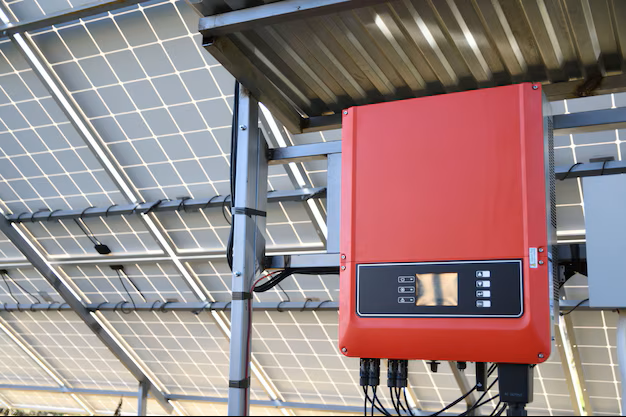
Australia’s sun-soaked spirit runs through Capel. Yet nothing sours a summer barbie faster than a sky-high power bill. In cozy Capel homes, I’ve seen people roast sausages and grumble when the meter spins faster than a Budgie on espresso. But here’s the silver lining: installing home solar battery storage can turn this story around. Imagine capturing all that brilliant southwest WA sunshine on your roof and squirreling it away in a battery for when you need it. Instead of watching excess energy drip back to the grid for pennies, you store it, then draw it at night or during peak-demand hours.
For Capel residents, it’s a game-changer: more savings, more independence, and a smaller carbon footprint. The combination of abundant sun (over 5.2 peak sun hours daily on average) and recent government incentives makes home solar battery storage in Capel more attractive than ever.
Drawing on recent data and government resources, we’ll unpack how battery storage works, how much it costs (and how rebates help), and why it’s a smart move in Capel. Along the way, I’ll sprinkle in tips, Aussie humor and even an analogy or two (think of your battery as a sponge for sunshine). By the end, you’ll see exactly why home solar battery storage isn’t just a fad – it’s a savvy solution to reduce your electricity bills.
Capel’s Sunshine: Turning Rain (and Sun) into Savings
Capel is blessed with sun. Most homes here already have solar panels – about 56% of Capel households have solar installed. Those panels do a terrific job generating power when the sun is out, but what about the spikes on your power bill come evening? This is where home solar battery storage shines. Let’s break it down: Capel’s climate means sunny days and warm summers. A typical 5kW system here can produce about 20–21 kWh per day. That’s enough to run your appliances, lights, and even keep the air-con humming well into the evening – if you have a battery. If not, any extra juice just goes to the grid (and you get a tiny credit in return). In fact, Western Australia’s feed-in tariffs (the credit you get for exporting power) have dipped drastically – as low as 2¢/kWh for most hours. Ouch. It means selling excess power is almost giving it away.
On the flip side, if you store your own solar power with a battery, you avoid buying expensive peak electricity later (often ~30¢/kWh) and dodge those paltry feed-in rates. It’s like filling a water tank on a rainy day so you don’t pay for tap water later – except here the “rain” is sunshine.
Summing up, Capel’s solar potential is high and local policies are tilting in favor of batteries. By capturing midday sun in a home battery storage system, homeowners can reduce grid dependence and use power when it costs most. As one local energy advisory notes, installing a battery allows you to “store solar power for peak usage times” and “reduce reliance on the grid”. In Capel lingo, you’re keeping the bills in check without sacrificing comfort.

Government Rebates: Incentives to Save on Solar Batteries
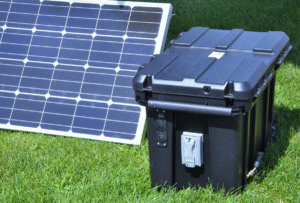
The biggest myth about home batteries is that they’re out of reach. Turns out, government incentives have swooped in to make battery storage far more affordable. The federal Cheaper Home Batteries Program offers around a 30% discount on eligible battery installations. In practical terms, that means the upfront cost of a battery system plummets – it’s like the government chipping in. For example, a ~10kWh battery system can cost about $10,150 fully installed (including necessary inverter) before rebates. After the 30% federal rebate, that comes down to roughly $7,100 (subtract ~$3,050).
On top of that, Western Australia’s state scheme delivers another rebate. If you’re on Synergy power in Capel, you could claim up to $1,300 off a 10kWh battery (Horizon Power customers even up to $3,800, though Capel is on Synergy’s grid). Combine both rebates and your out-of-pocket drops substantially. Plus, WA offers up to $10,000 interest-free loans for eligible households. Suddenly, a high-quality battery like the Tesla Powerwall (about 13.5kWh) or an LG unit isn’t just for tycoons.
All this is by design: the government wants you to install batteries. Saving energy on sunny days eases grid strain for everyone. According to the Department of Climate Change, every home battery we add “helps reduce electricity bills by making the most of cheap, clean solar power”. In other words, you win on savings and the whole community gets a stabler grid. Boots Energy Solutions has seen many Capel families take advantage of these programs, making home battery systems remarkably budget-friendly.
How Home Solar Battery Storage Works – A Simple Breakdown
Imagine your solar panels as ants gathering picnic sandwiches (sunlight) during the day. A home solar battery is like a picnic cooler keeping them fresh for dinner time. In tech speak, your panels generate DC electricity from the sun. During sunny hours, your home uses power first; any leftover flows into the battery (instead of out to the grid). Then, when night falls or clouds roll in, the battery discharges stored energy so your home stays powered.
Here’s the step-by-step (no bullet list needed, but to be clear): during daylight, your solar inverter directs electricity to your appliances, then excess to the battery. Later, the battery’s inverter kicks in to feed stored power back into your home circuits. It’s seamless – you barely notice when it switches modes. All this means you import far less from the grid, especially in the costly evenings. As one energised homeowner put it, adding a battery lets you “get the most of your solar in the middle of the day” and use it when electricity is priciest.
Importantly, not all batteries are equal. Most Australian homes use lithium-ion batteries (like Tesla Powerwall 2 or BYD). A typical system size is 5–15 kWh usable capacity. That can cover a big chunk of an evening’s electricity: for context, a 10kWh battery can power a fridge, lights and TV for 3-4 typical families during peak hours. Sizes can be stacked or daisy-chained for larger storage if your needs or budget are bigger.
Key Benefits of Home Solar Battery Storage
Besides the main perk – lower power bills – batteries bring several wins:
- Save big on bills: By storing and using your own solar power instead of buying from the grid at 30¢/kWh, you cut your electricity charges. It’s like banking free energy.
- Peak-rate protection: Electricity prices jump in peak times. A battery lets you avoid that price hike altogether. You might even shift usage (like running the clothes dryer at night on battery power).
- Blackout backup: Many home batteries can keep your lights on during outages. In stormy or hot times when the grid flickers, your fridge stays cool and your Netflix doesn’t cut out.
- Environmental win: Using stored solar means burning zero fossil fuels for that portion of your energy. It’s guilt-free electricity to chase the kids on a game console.
- Grid-stability perks: By charging and discharging smartly (and maybe joining a Virtual Power Plant), you help balance demand statewide. In the future you might even get paid a little for it.
These are real advantages Capel residents are realizing. In fact, nationwide data show that typical homes without batteries only cover ~40% of their electricity with solar, but with batteries that coverage jumps to 80–90%. In our sunny Capel setting, the math means heavy lifting by the battery during our long twilight hours – i.e. massive bill reductions.
Choosing Your Home Battery Storage System
Picking the right residential solar battery feels personal. It depends on your household’s habits and roof equipment. A local legend told me: “I had four teens and two fridges, so I needed a big battery or I was always nicking power from the grid.” First, assess your typical usage: do you use power mostly in the evening? (Most do.) How big is your solar array? A rule of thumb: batteries should be sized to your daily excess solar.
Common options include the Tesla Powerwall 2 (13.5kWh usable), LG Chem Resu (~6.5–9.8kWh), BYD (12–13kWh) and more. Each has its merits – Powerwall comes with a built-in inverter, while others need a hybrid inverter. The cost varies: as one price index shows, battery-only prices range $800–$1,300 per kWh installed (before rebates). Installation costs add wiring and inverters, so a full 10kWh system with everything can be about $10,150 (pre-rebate). But remember those rebates: after federal and WA credits, you’re often paying closer to $5,000–$6,000 net for a 10kWh setup.
Make sure to choose a Clean Energy Council-approved battery brand and an accredited installer (like those at Boots Energy Solutions). We also check that your inverter is “battery-ready”. If not, your installer may need to add a hybrid inverter or battery interface.
Tip: Boots Energy often points out that a smaller high-quality battery properly integrated is better than a huge one poorly matched. It’s like picking the right sized sponge to soak up all the sunshine without overflow.
Lastly, think ahead: if you ever upgrade, more panels or EVs, your battery could handle more load. Some batteries (and inverters) let you expand later. Ask your installer about Future-Proofing: you don’t want to install today and regret tomorrow that your 10kWh system won’t talk to the new solar panels or second battery you want later.
Installation in Capel: What to Expect
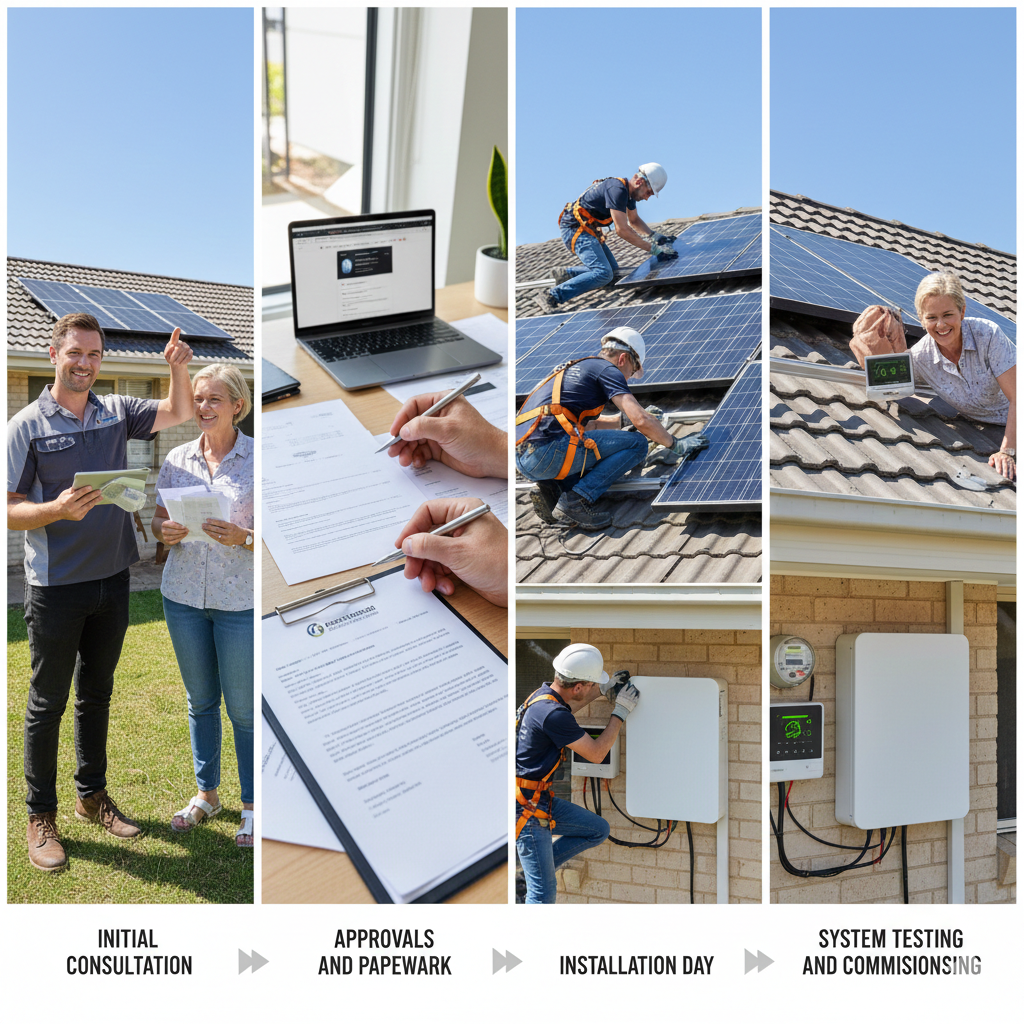
Installing a solar battery system in Capel is surprisingly quick. Once you pick a retailer, they’ll arrange a site visit. Usually, it takes 1–2 days of on-site work (plus a bit of paperwork for connections and rebates). Your current solar inverter might be swapped for a hybrid inverter, or a new inverter added. The installer mounts the battery (often on a wall or floor) and wires it into your switchboard. They do safety checks and commissioning – in Capel, most homes can get approval to connect without much fuss.
Costs: we mentioned around $8k–$12k for a 10kWh system before rebates. Of that, boots off a chunk with government discounts. You’ll also see the value of the federal STC rebate and battery rebate itemized on your quote. Many Capel installers, including Boots Energy Solutions, help you navigate the rebate applications (they handle it so you don’t stress the bureaucracy).
Once installed, a good installer will show you how to monitor and control the system. Most batteries let you track charge/discharge via a phone app or web portal – this is fun for a bit (I mean, who doesn’t like watching their battery go from 20% to 100% after breakfast?). You’ll also pick an energy plan that rewards solar; Boots often advises clients in Capel to review Synergy’s plans (or compare plans on independent sites) to align with their solar usage.
Mini Summary: Installation is straightforward, supported by rebates, and you’ll be up and running in no time. Boots Energy Solutions and other local experts ensure a smooth process.
Reducing Your Electricity Bill With a Solar Battery
Okay, let’s cut to the chase: how much can you save? This depends on your home’s energy use and tariffs. Capel homes typically pay around 30–40 cents per kWh for electricity. Without a battery, you might export half your solar at only 2–10 cents (due to WA’s low feed-in). A battery flips that. Roughly speaking, if you charge your battery with 10 kWh of free solar and use it instead of buying 10 kWh from the grid at 35c, you save $3.50 (minus a tiny bit for what you gave up in feed-in credits, like 10¢ or 30¢). So the net saving might be ~$3.20 for that 10kWh. Over time, that adds up.
One high-level study shows adding a battery to a typical home system can boost your solar self-consumption from ~40% to ~80%. If your annual bill is say $1,800, and you cut it 50% by using battery power, that’s $900 a year saved. A 10kWh battery could cover ~66% of a 20kWh/day usage profile, shaving thousands off a 10-year bill. (Results vary, but even conservative estimates show multi-year payback). Plus, you dodge most peak pricing.
Bottom line: the more evening (or early morning) electricity you use, the more a battery saves you. Families with kids, home offices, or night-shift work can benefit hugely. And this isn’t pie-in-the-sky – many Capel residents have seen 30–50% cuts in their power bills after adding a battery.
For eligible Capel homeowners, the WA Residential Battery Scheme can make battery installation more affordable. The scheme provides eligible households with access to battery rebates and no-interest loans, helping reduce the upfront cost of adding energy storage to an existing or new solar system. Because eligibility, rebate amounts and program conditions can change, homeowners should check the current requirements before making a decision. For the right system size and installation approach, Boots Energy Solutions can help you understand how the available incentives may apply to your home.
Home Solar Battery Storage: Which System Might Suit Your Home?
Not every Capel household uses electricity in the same way. A young professional working from home may have significant daytime consumption, while a family might use far more electricity in the afternoon and evening. That is why Home Solar Battery Storage should be selected around your actual energy habits rather than simply choosing the largest battery available.
| Household situation | Typical energy pattern | Potential battery benefit |
| Working professionals | More electricity in the evening | Stores daytime solar for cooking, entertainment and appliances |
| Families with children | Higher afternoon and evening demand | Helps cover larger evening energy use |
| Work-from-home households | Significant daytime consumption | Solar can power daytime loads while excess charges the battery |
| Homes with existing solar | Excess generation during sunny hours | Stores unused solar instead of exporting all of it |
| EV owners | Additional electricity demand | Can help manage household energy use, depending on charging times |
| High-energy households | Larger daily electricity consumption | A larger or expandable battery may provide better energy coverage |
The key point is that Home Solar Battery Storage works best when the battery is matched to your solar generation and household consumption. A professional assessment can look at your existing electricity bills, solar production and future energy plans before recommending a suitable home energy storage system.
For Capel homeowners, this approach can make the difference between simply owning a battery and having a solar battery system that genuinely works around your lifestyle. With the right sizing and installation, your stored solar energy can become a useful part of your everyday electricity strategy rather than an expensive box sitting on the wall.


How Home Solar Battery Storage Can Reduce Your Electricity Bills
The basic idea behind Home Solar Battery Storage is surprisingly simple: generate solar power, store the excess and use more of your own energy later. During sunny periods, your panels can supply the home’s immediate electricity needs while surplus generation charges the battery. When solar production drops, the battery can supply stored electricity before you need to purchase as much from the grid.
This makes Home Solar Battery Storage particularly useful for households whose electricity consumption is higher in the afternoon and evening. Think of it as shifting your solar electricity from the time it is produced to the time you actually need it. That shift can increase self-consumption and potentially reduce electricity purchases.
However, Home Solar Battery Storage is not a magic switch that guarantees a lower bill. Battery capacity, system efficiency, household consumption patterns, electricity tariffs and feed-in arrangements all affect the financial result. A properly sized system is therefore much more important than simply choosing the biggest battery available.
Local Voice: Capel Case Studies and Community
Boots Energy Solutions has partnered with a few Capel families. One case: the Johnsons (a young couple with two small kids). They installed a 6.5kWh battery. They reported cutting their nightly power draw by almost half, slashing their grid consumption and saving an estimated $1,000 in the first 6 months. Another: the Nguyen household (retirees on a pension) replaced a dying gas hot water with a heat pump + a 5kWh battery. They say their cold mornings are warmer and their bills are well below their old gas-electric combo. These aren’t outliers: battery adoption is rising even in rural Capel.
Community-wide, businesses and schools are hopping on too. The Amaroo School (Capel) installed panels and a battery to offset its pool and lab electricity. They report the battery was “an essential piece of the puzzle” in making solar pay off (particularly with flat school consumption). Clearly, Capel is embracing energy solutions. If neighbors can do it, why not you?
Choosing the Right Home Solar Battery Storage System
Getting the right size is one of the most important decisions when considering Home Solar Battery Storage in Capel. A battery that is too small may leave plenty of excess solar going to the grid, while an oversized battery may cost more than necessary and spend much of its time underused.
A good Home Solar Battery Storage design should consider your existing solar system, average daily electricity consumption, evening usage and future energy needs. If you’re planning to add an electric vehicle, induction cooking, a pool pump or other major electrical loads, those plans should also be considered before installation.
The best Home Solar Battery Storage solution is therefore not necessarily the largest or most expensive option. It is the system that matches how your household actually produces and consumes electricity. A professional assessment from Boots Energy Solutions can help determine whether battery storage makes sense for your property and what system size is appropriate.
Conclusion
In Capel, home solar battery storage is no longer a niche hobby – it’s a smart, money-saving strategy. Harnessing ample regional sunshine, local homeowners are plugging in batteries to capture solar energy and use it when it really matters. With solar irradiance averaging 5.2 peak sun hours, even a modest battery can cover a big chunk of a family’s daily power needs. The numbers speak for themselves: installing a typical 10 kWh battery system in Capel might cost around $10,000 pre-rebates, but with federal and state discounts it can be more like $5–6K net. That investment translates to hundreds of dollars saved each year, all while cutting carbon emissions. From the lived experience of Capel residents – young families to retirees – adding a home battery consistently turns frugal solar usage into tangible bill relief.
Don’t let another friendly sunlit day go to waste. Boots Energy Solutions, your local solar and storage experts, can walk you through the whole process: sizing the right solar battery system, tapping into rebates, and fitting everything safely. We’ve helped many Capel homes switch to battery storage, and we’re ready to help you too. Ready to lower your electricity bills and take control of your power? Contact Boots Energy Solutions today for a free consultation. Our team will tailor a home battery storage plan that fits your roof, your needs, and your budget. Trust us, your future self (and your wallet) will thank you.
FAQs About Home Solar Battery Storage in Capel
Q: What is a home battery storage system?
A home battery stores excess electricity generated by your solar panels during the day. You can then use that stored energy at night or when solar production is low, helping reduce your reliance on grid electricity.
Q: How can a solar battery reduce my electricity bill?
Instead of sending unused solar power back to the grid for a feed-in credit, you can store it and use it later. This can increase your solar self-consumption and reduce the amount of electricity you need to purchase from the grid.
Q: Are battery rebates available in Capel?
Eligible households may benefit from the Australian Government’s Cheaper Home Batteries Program, along with applicable Western Australian incentives. Eligibility and rebate amounts can change, so it’s important to check the current requirements before installing a system.
Q: How long does a home battery last?
Most modern lithium-ion home batteries are designed to provide many years of service, with warranties commonly covering around 10 years. Actual performance depends on the battery model, usage, installation and operating conditions.
Q: Is a battery worth adding to an existing solar system?
It can be, particularly if you regularly generate excess solar during the day but use most of your electricity in the evening. The right battery size depends on your energy consumption, existing solar system, electricity tariff and budget.