
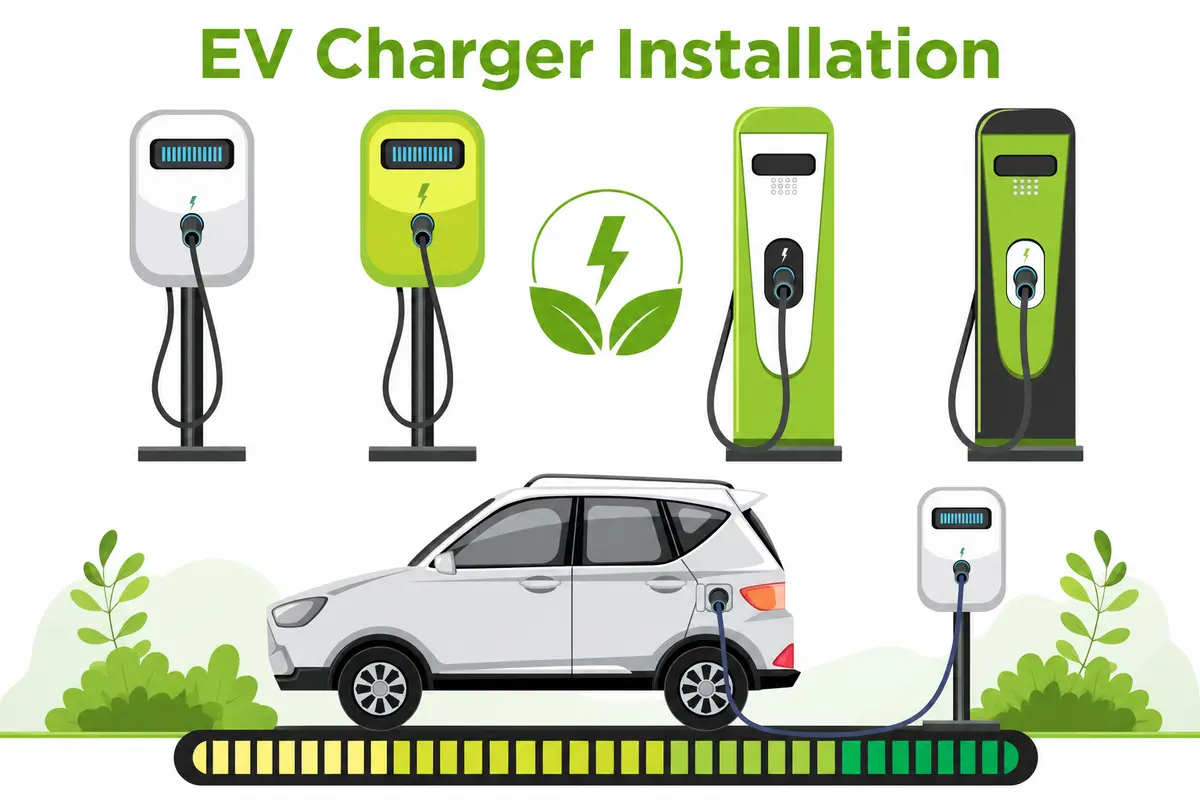
That’s the quiet magic of having your own charger at home and it’s exactly why Electric Car Charger Installation has become one of the savviest upgrades a homeowner can make right now. Reckon it’s right up there with solar panels in terms of “why didn’t I do this sooner” home improvements.
Whether you’ve already got an EV parked in the driveway or you’re simply weighing up your options before you buy, I want to walk you through why installing a home charger makes so much sense for your wallet, your daily routine, and honestly, your sanity.
And if you’re around Capel or the wider South West, getting it done properly really comes down to working with trusted EV charger installation experts who know the local electrical landscape inside out.
The Real Cost of “Just Using Public Chargers”
Let’s be honest with each other for a second. When people first get an EV, the plan is often “I’ll just use the public chargers around town.” Sounds simple enough, right? In practice, it gets old fast.
Here’s the thing nobody tells you upfront: public charging in regional WA isn’t always reliable, and it’s rarely the cheapest option. You’re at the mercy of whoever’s using the charger before you, whether it’s working that day, and pricing that can swing depending on the network and the speed of the unit.
Compare that to charging at home overnight, where your car is ready and waiting every single morning – like your phone, except this one drives you to footy training. A few things tend to stand out once people make the switch:
- Lower running costs. Charging off your home power, especially overnight on a cheaper tariff, generally costs less per kilometre than public fast-charging or petrol.
- No detours. You’re not planning your errands around where the nearest working charger happens to be.
- Consistent battery health. Slower, steady home charging is gentler on your battery over the long haul than relying on rapid chargers constantly.
It’s a bit like the difference between cooking dinner at home versus grabbing takeaway every night. Sure, takeaway’s fine occasionally, but it adds up – in cost, convenience, and honestly, a bit of stress too.
Why Home Installation Beats a Standard Power Point
Get this question a lot: “Can’t I just plug my EV into a regular wall socket?” Technically, yes. Practically? It’s a bit like trying to fill a bathtub with a garden hose that’s been kinked halfway down – it’ll work, eventually, but you’ll be waiting a long time, and you’re putting more strain on your home’s wiring than it’s built for.
A dedicated EV charger (often called a wall charger or “EVSE” if you want to sound clever at a barbecue) is designed specifically for the job. It charges faster, safer, and is built to handle daily, repeated use without breaking a sweat. For homeowners around Capel and the broader South West, getting this set up properly really does call for experienced professionals who understand both the electrical requirements and the specifics of your home’s switchboard capacity.
What Does Electric Car Charger Installation Actually Involve?
Good question. Let’s break it down without the jargon overload.
| Step | What Happens | Why It Matters |
| 1. Site assessment | An electrician checks your switchboard, existing wiring, and where you’d ideally park to charge | Confirms your home can safely handle the extra load |
| 2. Charger selection | You choose between a basic AC wall charger or a smarter, app-connected model | Affects charging speed and how much you can monitor/control remotely |
| 3. Installation | Charger is mounted (garage, carport, or exterior wall) and wired into your switchboard | This is the technical bit – definitely leave it to a licensed sparkier |
| 4. Testing & handover | Charger is tested, safety-checked, and you’re shown how to use it | Peace of mind that everything’s compliant and working |
Most straightforward residential installs are done within a day, assuming your switchboard doesn’t need an upgrade. Older homes and there are plenty of lovely older homes scattered around Capel and Dalyell up sometimes need a bit of extra electrical work first. Worth checking early rather than discovering it mid-install.
Does It Actually Add Value to Your Home?
Here’s where it gets interesting for anyone thinking long-term (and aren’t we all, even if we pretend otherwise). As EV ownership keeps climbing across Australia, a home charger is shaping up to be one of those features – like solar panels or a decent water tank – that future buyers actively look for.
According to the Australian Government’s Green Vehicle Guide, charging infrastructure is becoming increasingly accessible across the country as EV uptake grows, which says a lot about where things are heading.
If you’re renovating, building new, or just future-proofing the family home, a charger is a relatively small upfront job that pays dividends down the track both in resale appeal and in not having to retrofit one later under time pressure when you’ve already bought the EV.
Think of it like installing ceiling fans before summer hits, rather than panic-buying portable units when it’s already 38 degrees. A bit of foresight saves a lot of hassle.
Is It Worth It If You Don’t Own an EV Yet?
Fair question, and one I hear often from people who are “EV-curious” but not quite there yet. My honest take? If you’re reasonably confident an EV purchase is somewhere in your next few years, getting the charger sorted now particularly if you’re already doing electrical or renovation work saves you the cost and disruption of doing it twice.
Quick Comparison: Home Charging vs Public Charging
| Factor | Home Charger | Public Charger |
| Convenience | Charge overnight, every night | Depends on availability and location |
| Cost per charge | Generally lower, especially off-peak | Often higher, varies by network |
| Charging speed | Matched to your daily needs | Can be faster, but queues are common |
| Reliability | Entirely in your control | Subject to maintenance and demand |
| Upfront cost | One-off installation cost | None, but ongoing running costs |
When you lay it out like that, the case for home installation becomes pretty hard to argue against particularly if you’re driving daily for work, school runs, or commuting toward Bunbury.
A Few Things Worth Asking Before You Commit
Before you book anyone in, it’s worth having a think about:
- Where will you actually park to charge? Garage, carport, or driveway – this affects cable length and placement.
- What’s your daily driving distance? This shapes whether a basic or faster charger suits you best.
- Is your switchboard up to date? Older homes sometimes need a small upgrade alongside the install.
- Do you have solar? Pairing a home charger with solar panels is where the real long-term savings start to shine.
Conclusion
At the end of the day, Electric Car Charger Installation isn’t just about convenience, though goodness knows that’s reason enough on its own. It’s about lower running costs, a smoother daily routine, and a home that’s genuinely ready for where transport in Australia is heading.
Whether you’re already driving electric or simply planning ahead, getting it sorted properly with the right electrical setup from the start – saves you headaches, money, and time down the track.
So, if you’ve been mulling it over (and let’s be honest, you probably have, or you wouldn’t have read this far), now’s a pretty good time to start asking questions and getting quotes. Your future self, charging up at home while everyone else queues at the servo, will thank you for it.
Ready to make the switch? Reach out to a licensed local electrician to get a proper site assessment and find out exactly what your home needs it costs nothing to ask, and it’s the first real step toward charging smarter, not harder.
FAQ
- How long does it take to charge an EV at home?
It depends on your charger and your car’s battery size, but most home setups will fully charge an EV overnight, which suits the vast majority of daily driving needs without any planning required.
- Can I install an EV charger myself to save money?
No, this isn’t recommended. EV chargers need to be installed by a licensed electrician who can assess your switchboard and wiring to ensure everything is safe and compliant.
- Will a home EV charger increase my electricity bill?
Yes, but usually less than you’d expect, especially if you charge overnight on a cheaper tariff or pair your setup with solar power to offset the cost further.
- Do older homes need extra work before installing a charger?
Sometimes. Older switchboards occasionally need an upgrade to safely support a dedicated EV charger, which is why a proper site assessment beforehand is so worthwhile.