
It’s a sunny day in Capel, WA, and you’re dreaming of powering your home with rooftop solar, storing energy in batteries and charging your EV in the shed. But before you get too excited, ask yourself: is your electrical switchboard ready for this upgrade? Your home’s switchboard (that old fuse box on the wall) is the heart of your electrical system. If it’s outdated or overloaded, it can hold back your clean-energy plans – or worse, pose a safety risk. Let’s have a cuppa and chat about why many Capel homeowners need a switchboard upgrade, especially when adding solar panels, battery storage or an EV charger.
Boots Energy Solutions is all about keeping things safe and smooth. We see old switchboards struggling to meet modern demands every day. We know young professionals in our area want modern gear and green tech, so we’ll explain it all in plain language. In this article, we’ll walk you through why upgrading your switchboard in Capel is crucial for safety, for adding solar and batteries, and for installing EV charging – with no shock jargon.
Why Upgrade Your Switchboard Now
Imagine your switchboard as an old-school power strip: it was fine when houses had few gadgets, but now we have air-con, big ovens, pool pumps, and fancy electronics. An upgrade makes room and improves safety. Here are some key reasons to replace or upgrade the switchboard in Capel:
- Safety & Compliance: Modern switchboards use circuit breakers and RCDs (“safety switches”) instead of old fuses. RCDs cut power instantly if there’s a fault, preventing electrocution and fires. Western Australia requires at least two RCDs protecting powerpoints and lights in every home, and all circuits must be covered if you’re selling or renting. Many old boards have none or just one, so an upgrade brings you up to code.
- Old Boards Don’t Handle New Loads: Aussie electricians often say – if your home is more than 20–30 years old, the wiring standards have changed twice since then. A classic 1960s fuseboard is unsafe by today’s rules. Frequent tripping, flickering lights or even a burning smell are signs it’s struggling. If you see those, it’s time for a new panel.
- Space for Expansion: Think about adding solar or an EV charger. These installations need extra circuit breakers or devices (like hot-water contactors or consumption meters for solar). Many older switchboards simply don’t have spare slots. Upgrading creates room for extra breakers, smart devices and surge protection to handle future loads.
- Switchboard Reliability: Over years, connections can loosen or corrode, especially near the coast or river (Capel’s coastal breeze!). A modern switchboard has better insulation and materials, so it’s more robust against humidity and heat.
In short, upgrading your fuse box is like swapping from a pushbike to a highway-ready car: it lets you connect bigger loads safely and keeps up with today’s standards.
Preparing for Solar Power: What Your Switchboard Needs
Adding solar panels is exciting, but it changes how your electricity flows. In WA, your solar inverter will tie into your switchboard before it feeds the grid. That means your panel must handle the extra wiring and devices. Boot’s team often advises: treat solar installation as a chance to modernise the whole board. Why?
First, space and wiring. A solar inverter usually needs two free circuit-breaker slots (one for output, one for AC isolation). If your board is already full of ancient fuses, there’s no room. SolarQuotes (an Aussie installer resource) notes that installing solar often comes with adding a “consumption meter” or contactors for hot water – and most old boards can’t fit those extra bits without a remodel. In practice, electricians might have to remove the old meter enclosure or cram circuits together. Why risk that? It often makes sense to fit a new board at the same time as the solar gear.
Second, safety switches (RCDs). Australian standards say any new or altered circuit must have its own RCD. If you add solar, you’ll likely add new cabling or meters, triggering this rule. Many older Capel homes with vintage switchboards only have a single RCD (or none), so adding solar requires more RCDs anyway. Instead of piecemeal fixes, a full upgrade installs enough RCDs from the get-go, protecting all circuits properly.
Third, official guidelines. The Australian Government’s Solar Consumer Guide is a free resource covering installation steps, system sizing, benefits and more. It stresses using approved equipment and qualified installers. For your switchboard, that means making sure it’s “fit for solar” by meeting current codes and having labeled, easily accessible breakers for the inverter feed. (For example, the guide mentions you’ll need a switch or breaker accessible for maintenance.) The main takeaway: a tidy modern panel makes solar work better and safer.
Finally, consider permit and utility requirements. In Capel, most standard rooftop solar installs don’t need council approval (unless your place is heritage-listed). But you do need approval from Western Power/Synergy to connect. When you apply, they’ll ask about your switchboard too. If you have an old fuse box with asbestos or missing labels, Western Power won’t approve the smart meter needed for solar. They want a compliant board. Upgrading now smooths your application with the utility.
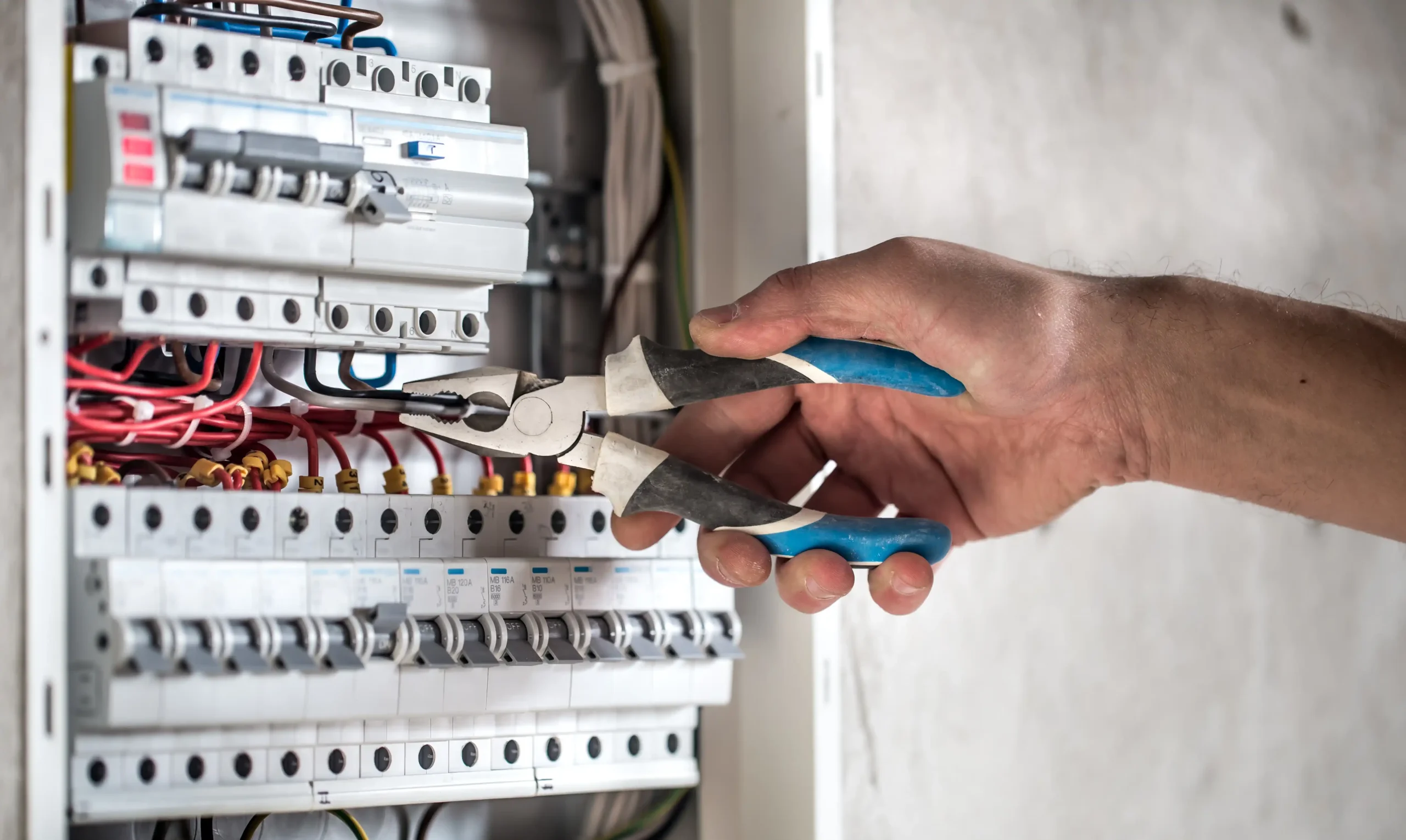
Switching to solar triggers upgrade needs almost by default. Many electricians (and Boots!) say: “Installing panels is the perfect time to fix the panel.” In practice, a modern switchboard means you get accurate solar monitoring, safety switches for every circuit, and space to expand. As SolarQuotes puts it, overhauling the board alongside the solar gear “makes good sense” because you often can’t fit everything in the old panel without it. It’s like having the fridge break just as your new dishwasher arrives – fix the wiring while you’re at it, and future-proof the kitchen!
Adding Battery Storage: Meet WA’s New “Whole-of-Site” Rules
Thinking of adding batteries after your solar? Western Australia has new rules that could affect you. From 1 May 2026, all new or upgraded solar + storage systems on the SWIS (South West Interconnected System, which Capel is on) must be “whole-of-site” compliant. That means your entire home energy system (panels, inverters, batteries) either needs to be remotely monitored/controllable by the grid operator, or be capped at a fixed export limit of 1.5 kW for the whole site.
Why mention this in a switchboard article? Because meeting these rules often means choosing compatible equipment and, in some cases, replacing older inverters or parts of the panel. For example, if you opt to be “smart and connected,” your inverter might need extra wiring to a gateway device (often near the switchboard) so that Synergy or Western Power can see it online. If instead you choose a fixed export (so you don’t need internet control), installers might still need to reprogram the inverter limits – often easier with a modern panel and clear labeling.
Boots Energy Solutions has noticed clients sometimes have older hybrid inverters or setups that can’t easily be adapted. In many cases, getting battery ready is simplest if you upgrade the board and inverter in one go. The new WA government guidelines explicitly allow bigger systems (up to 30 kVA) but require compliance with AS/NZS4777.2 (Australia/Region B settings) and remote disconnection capability if you want to export more than 1.5 kW. In practice, we often recommend installing a new hybrid inverter and fresh switchboard at the same time. That way, you’re fully compliant and have all your panels, batteries, and future EV charger on a sturdy, code-compliant platform.
In short, Capel homeowners planning batteries should be aware: your switchboard and inverter may both need attention to meet these new standards. But don’t panic – it just means “futureproofing” your home. And there are savings: the Cheaper Home Batteries Program offers a government rebate (~30% off battery cost) for eligible installs. Combining that with a good switchboard and inverter package makes a winning team for your wallet and the grid.
Charging EVs at Home: Main Switch and Capacity
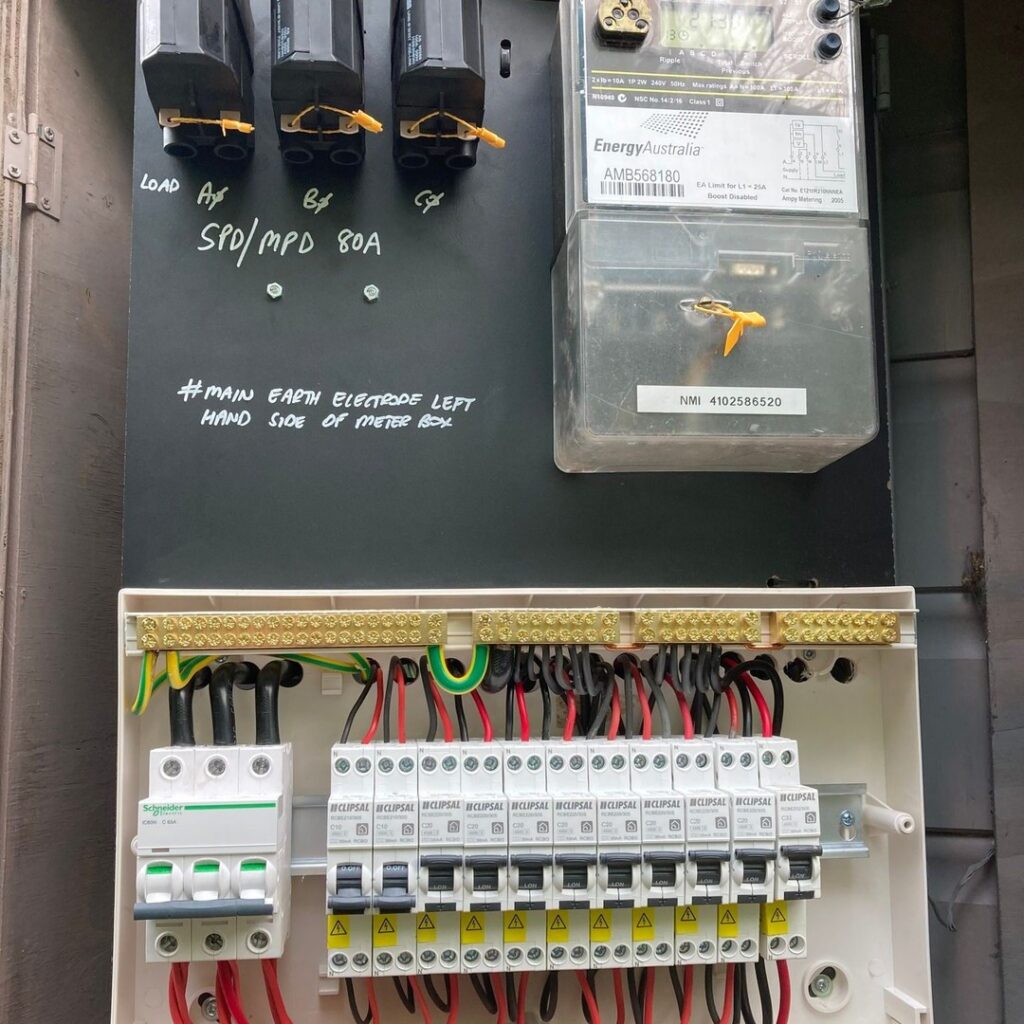
Got a Tesla or thinking of one? A home EV charger is exciting, but it adds a hefty load. Western Power’s EV guidelines make it clear: you must not exceed your supply capacity, and your main switch often needs upgrading to a breaker type. Older boards sometimes have a heavy ceramic fuse, which isn’t suitable for modern EV equipment. Switching to a circuit-breaker main gives better fault protection and easier maintenance.
Key points for EV charging and your switchboard:
- Main switch upgrade: Western Power specifically notes that installing EV supply equipment (EVSE) requires the consumer’s main switch to be a circuit breaker, not an old fuse. This is for safety and capacity control.
- Check your connection limit: A typical home single-phase supply in Capel is up to 63A (15 kW). A 7 kW EV charger (often a 32A single-phase unit) can be installed as long as the total load (EV + other appliances) stays within that limit. If your panel is old or the copper cable too small, you might need a bigger meter box or even three-phase power.
- Load management or upgrade: If adding the EV puts you over the limit, you have two choices per Western Power: upgrade the supply contract, or install a smart charger with current-limiting function. An upgraded switchboard makes room for such devices (for example, a Din-rail load controller) and for the extra circuit breaker dedicated to the charger.
- Wiring and certification: Running an EV circuit usually means pulling a new cable (often 32A or 40A rated) from the switchboard to the garage. All that new wiring must be installed neatly and tested. An upgraded panel can have a spare breaker slot ready, whereas an old one might force you to shuffle breakers around at night.
If you add an EV charger, treat it like solar: plan the panel accordingly. Boots Energy Solutions can inspect your setup and tell you whether a small board update or a full replacement is needed before installing the charger. It’s all about ensuring your supply stays safe under the load – after all, we don’t want your new EV charger tripping your main fuse and leaving you stranded without power!
Electrical Safety First: RCDs, AS/NZS Standards and Peace of Mind
Beyond solar and EV, switching to a modern switchboard means a big leap in overall safety. Australian wiring rules (AS/NZS 3000:2018 and related standards) have evolved to reduce shock and fire risks. Here are a few clarifications you, the homeowner, should know:
- Multiple RCDs: New boards often have one RCD per pair (or more) of circuit breakers. That way, if one circuit trips, you don’t lose your entire house’s power. By law in WA, two RCDs is the minimum; most electricians fit even more. If your current board has only one RCD (or none), upgrading adds redundancy: one RCD might guard all power points, another for lights, etc.
- Earth leakage protection: Modern RCBOs (combined breaker + RCD) are ideal. They protect individual circuits fully. Solar Quotes and others note that older safety switches were big and needed room. Now they’re slim, and converting 2- or 4-pole safety switches into multiple single-pole RCBOs gives greater redundancy. In plain terms, new breakers are smaller and smarter than grandma’s big red safety switch.
- No more asbestos or brittle switches: Some 1960s boards used asbestos or old Bakelite materials. Western Power won’t work on switchboards with asbestos, so they have to be swapped out. Upgrading replaces any dodgy insulation with clean, safe plastic breakers.
- Labeling and documentation: Part of any upgrade is clearly labeling each circuit and keeping a compliance certificate. This may not sound exciting, but if you ever sell the house, this paperwork is gold – buyers and their inspectors look for it. Plus, well-labeled circuits save hassle (and shock) when you flip breakers in the future.
In everyday terms, a new switchboard is like a health-check for your home’s electricity: making sure every circuit has a safety net. You and I both want to avoid fires and shocks, so having RCDs on every socket and light is a no-brainer. As Energy Safety WA emphasizes, RCDs are the “single most effective measure” against electrocution and fire. Upgrading means ticking that box for every point in your Capel home.
What to Expect: Costs, Process and Boots’s Role
You’re now convinced an upgrade is a smart move. What next? In Capel, the process is straightforward: contact a licensed electrician (like Boots Energy Solutions) for an inspection and quote. A typical switchboard upgrade involves removing the old board, possibly rewiring some circuits, installing a new enclosure with breakers and RCDs, and testing everything.
Timeframe: Most residential upgrades take a day or two. If there’s rewiring (e.g., the old meter position must be moved, or new cable to an outbuilding), it could stretch longer. At Boots Energy, we coordinate with the grid guys too: sometimes Western Power has to swap a fuse for a new meter base if needed, which takes another day. On average, factor 1-3 days plus a week or two for paperwork and grid approvals if you add solar or batteries.
Cost: Upgrading isn’t free, but it’s not as scary as you think. In Perth/WA, small switchboard upgrades often run $700–$2,000 for a standard single-phase home. This usually covers a new 200–250A board with 4–6 breakers, including the required RCDs. If you have a simple 160A board, it might be cheaper ($300–$600). A large three-phase panel or extensive rewiring can push costs into the $3,000+ range. For most young families in Capel, a mid-size upgrade is often in the low thousands.
Factors affecting cost include:
- Number of circuits: More lights or power lines need more breakers.
- Rewiring: If wires are old or need relocation, that adds labour.
- Permits: In WA, electricians handle the permit/inspection; sometimes a small fee ($200–$500) is included.
- Accessories: Surge protection or smart home gear can be added.
At Boots, we give a free quote. We break down all costs: “Here’s your new board, labor, permit fee, and any extra bits.” We also note that this is an investment: by spending on a quality upgrade now, you save on emergency electrician calls later and make future projects (solar, EV) cheaper and quicker.
What Boots does: Our team is local Capel and WA licensed. We’ll inspect your existing board for issues: loose connections, asbestos, missing RCDs, etc. We’ll discuss your goals (e.g. “I want a 6.6 kW solar and a battery”) and design a new board around that. We can even coordinate with your solar installer to ensure meter spaces and cable entries are spot-on. After install, we thoroughly test everything under AS/NZS 3000 standards and leave you with a compliance certificate.
In short, Boots makes the upgrade process easy. We handle all the heavy lifting and paperwork, so you can focus on charging your EV or sipping chilled drinks from your rooftop solar power without worry.
Conclusion
Upgrading your switchboard in Capel is the foundation of a safe, future-proof home. In this guide we’ve covered the key takeaways: modern switchboards with RCDs vastly improve safety; adding solar or EV charging often requires extra circuit space and protection; and WA’s new rules for batteries make proper equipment selection critical. We also learned that typical upgrade costs in WA start around a few hundred dollars for small jobs, up to a couple thousand for larger installs, and that government programs (like the Home Batteries rebate) can help offset expenses.
Remember, you and I want our home to be reliable and code-compliant. A good switchboard upgrade might feel like an unseen part of the process, but it’s essential groundwork for any solar, battery or EV project. It’s like building a sturdy foundation before adding a second story – the extra support makes everything else possible.
Ready to take the next step? Our friendly team at Boots Energy Solutions in Capel would be happy to help. We provide free consultations and clear quotes, and we design every job to suit your lifestyle and the WA regulations. Whether you need a simple RCD retrofit, a full fusebox replacement, or a tailored solution for solar, batteries and EV charging, we’ve got you covered. Contact us today to discuss your needs – we’ll give you advice (no jargon!), a competitive quote, and the peace of mind that your home is in qualified hands. Let’s get your home powered up safely for the future!
FAQs
1. What is a switchboard upgrade and why might I need one?
A switchboard upgrade replaces or improves an outdated fuse box with modern circuit breakers and RCDs. It can improve safety, provide more space for new circuits and prepare your home for solar, batteries or an EV charger.
2. Do I need a switchboard upgrade before installing solar?
Not always, but many older switchboards need upgrading before solar can be connected safely. Your installer may need extra space for breakers, protection devices and other equipment. A compliant board can also help avoid installation delays.
3. How do batteries affect my switchboard?
Battery systems can require additional protection, wiring and compatible inverter equipment. In some cases, an older switchboard may need upgrading to accommodate the new system and meet current WA requirements.
4. Will an EV charger require a switchboard upgrade?
It depends on your existing setup. A dedicated EV charger needs an appropriate circuit and your home’s electrical capacity must be checked. If your switchboard uses outdated equipment or lacks capacity, an upgrade may be necessary.
5. How much does a switchboard upgrade cost?
The cost depends on your home’s existing switchboard, number of circuits, wiring condition and whether you’re adding solar, batteries or EV charging. The best approach is to have a licensed electrician inspect the board and provide a clear, itemised quote.